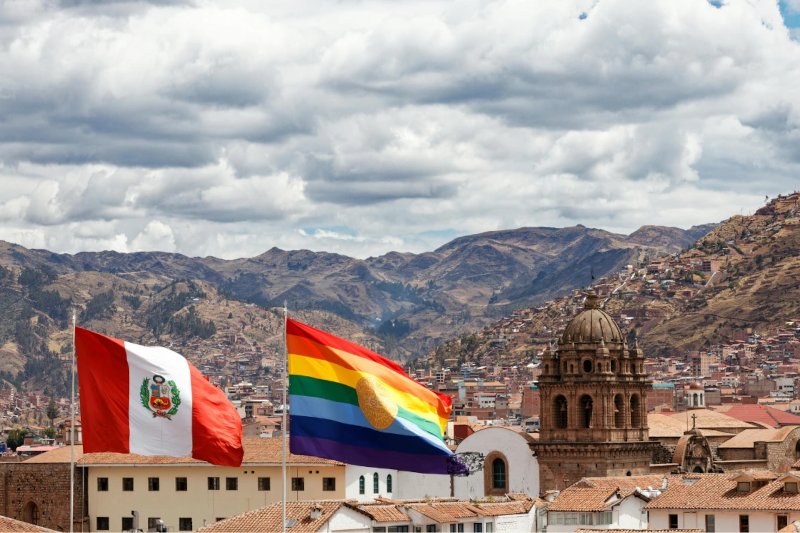
If you’ve ever wandered through Cusco—maybe with a coffee in hand, maybe slightly out of breath because, hello, altitude—you’ve probably seen a bright rainbow flag rippling over a plaza, at Qoricancha, or a balcony around the Plaza de Armas. A lot of people point at it and say, “Ah, the Inca Empire flag.” It looks ancient, photographs well, and it feels right.

But here’s the thing: history doesn’t always match the souvenir rack.
The flag of the Inca Empire is less “one official banner” and more a story about symbols, power, textiles, and a modern city’s pride. And once you get that, the whole visual world of Tahuantinsuyo (the Inca realm, “Land of the Four Parts”) starts to make a lot more sense—without needing a single flagpole.
Honestly? Not in the way most of us mean it.
The modern idea of a national flag—big fabric rectangle, clear design, raised high—is mostly a European habit that spread through empires, navies, and later nation-states. The Incas didn’t run their identity system that way. They had plenty of inca civilization symbols, but a single, standard “inca flag” for everyone to rally behind? That’s not what the evidence points to.
And yet—this is where it gets fun—I’m not saying the Incas didn’t use banners at all. They did. Just not that kind.
When the Sapa Inca (the emperor) traveled or went to war, he wasn’t surrounded by blank space. He was surrounded by signals: staff-topped standards, distinctive patterns, feathers, metal disks, and elite clothing that worked like instant recognition on a crowded field.
Think of it like this: a modern company has a logo system, a set of approved colors, and strict rules about how it appears. The Inca state had something similar—only it was woven, carried, and worn.
Chroniclers describe small, rigid square standards attached to poles and carried by attendants. They weren’t mass-produced “national flags.” They were closer to a ruler’s personal insignia. If you’ve ever seen a medieval coat of arms, you’re in the right neighborhood.
And the ultimate “this is the state” symbol wasn’t cloth at all. It was the Mascapaicha, a crimson fringe crown. Whoever wore it was the authority. Simple. Chilling, even.

Okay, let’s address the rainbow. Did the Incas revere it? Yes. Did they fly a neat, seven-stripe rainbow as an official imperial flag? There’s no solid archaeological proof for that.
So why does the rainbow keep showing up?
Because the rainbow is powerful, and because Cusco has its own modern story—one that blended local pride, tourism, and a bit of historical wishful thinking.
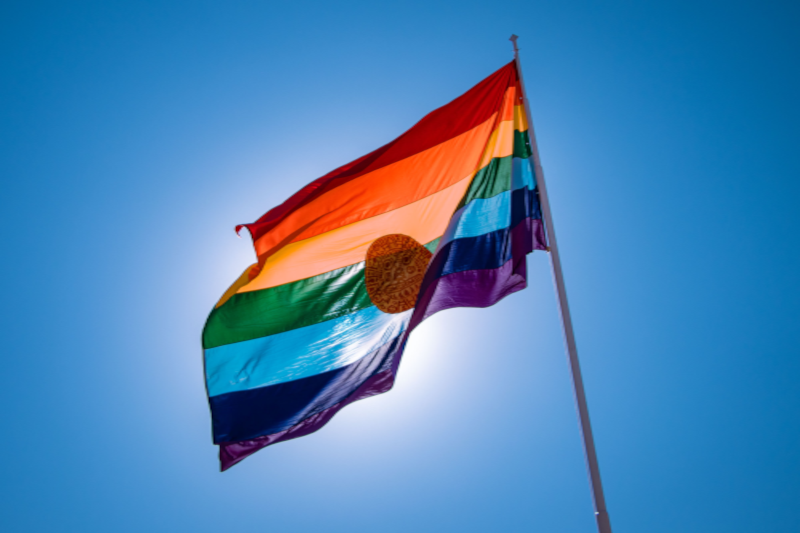
The striped rainbow flag you see in Cusco today is a civic flag adopted in the late 20th century. A local radio station promoted it in the 1970s, and the city later made it official. It was presented by some as the “lost” Inca Empire flag—but historians pushed back fast. The concept fits modern flag culture more than pre-contact Andean practice.
Here’s a mild contradiction I’m going to stand by: it can be historically off and still matter. Cusco’s flag works as a city symbol. It’s a badge of place. People feel something when they see it. That’s real, even if it isn’t Inca-era.
Also, yes, it looks a lot like the LGBTQ+ Pride flag. That similarity creates confusion, arguments, and sometimes awkward travel photos. But the Cusco flag has seven stripes (often), and the Pride flag is typically six. Similar vibe, different roots, different use.
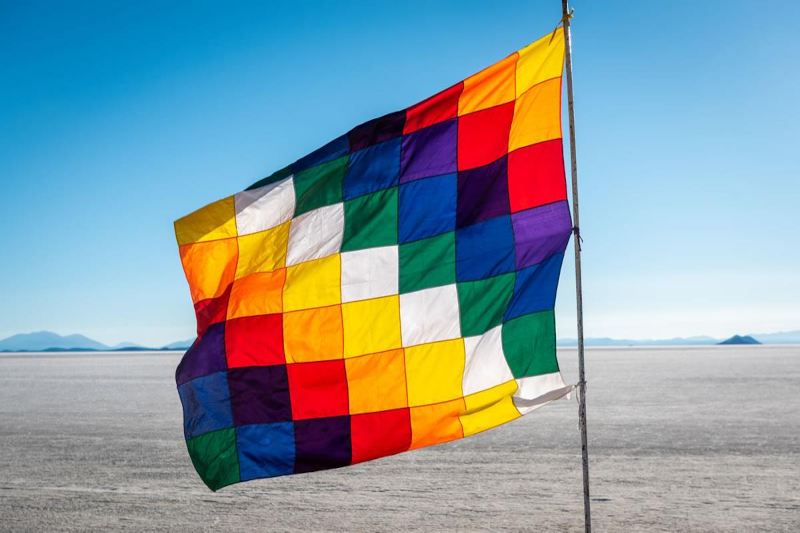
If you’re talking about Andean flags in general, the Wiphala has to be part of the conversation. It’s a square flag with a diagonal grid of colored squares—forty-nine in many common versions. It shows up across indigenous movements, especially among Aymara and Quechua communities, and it’s legally recognized in Bolivia as a state symbol alongside the national flag.
Is it “the Inca flag”? Not exactly. Its patterns echo older Andean design traditions (you’ll see similar geometry on ceramics and textiles), but connecting it directly and cleanly to a single Inca imperial banner is hard. What we can say with confidence is that it has become one of the most visible modern emblems of indigenous identity and political presence in the Andes.
And the color meanings? People explain them in different ways, but a common reading goes like this:
If that list feels a little “too tidy,” you’re not wrong. Symbol charts often get cleaned up over time so they’re easier to teach, share, and rally around. That doesn’t make them fake. It makes them usable.

Even without a striped banner, the rainbow carried weight. In Quechua it’s often called k’uychi. It was tied to weather, omen-reading, and the lively relationship between sky and earth that runs through Andean religion.
Rain is not a cute detail in the Andes; it’s a project dependency. It affects harvests, travel, and survival. So a rainbow isn’t just pretty—it’s a message. A sign that the sky is doing something. A moment where the world looks arranged on purpose.
In colonial-era paintings (especially those linked to the Cusco School), you’ll sometimes see rainbows arcing above Inca figures. Are those paintings “pure” pre-contact sources? No—they’re shaped by colonial contexts. But they still show how Andean and European visual habits tangled together, sometimes smoothly, sometimes not.
If you want the closest thing to an Inca “flag system,” look at cloth. And I mean that in the most practical, workaday way: textiles were status, identity, and messaging. They were also expensive and controlled.
The Incas built an empire without an alphabetic writing system, but they had other tools: quipu knot records for accounting and administration, and a rich visual language in weaving. That’s not a romantic claim—it’s an operational one. It’s how you manage a huge territory with many languages and local cultures.
One of the most famous Inca design elements is the tocapu: small geometric squares woven into elite tunics (uncu). They look decorative, but they also function like coded identifiers—kind of like badges, titles, and organizational charts rolled into art.
Some quick, grounded points:
And there’s a detail I love: sources suggest the Sapa Inca could wear a tunic covered in many different tocapu. The visual effect is loud, almost overwhelming—like saying, “All regions, all roles, all power… report here.”
Battlefields are messy. Even modern armies care about unit markers for a reason. The Incas did too. Tunics with bold checkerboards and sharp color blocks helped identify groups at a glance. You don’t need a huge flag when your whole formation is a moving pattern.
Let me shift gears for a second, because people often ask about crosses in Andean art. The Chakana—often called the Andean Cross—is a stepped cross shape that predates the Incas but was widely used across the region.

Its popularity makes sense: it’s simple, geometric, and flexible. You can carve it in stone, weave it, paint it, repeat it. And it maps neatly onto Andean cosmology, which many people describe in three layers:
You’ll also hear the condor, puma, and snake used as animal shorthand for those layers. Is that the only way to explain it? No. But it’s a useful entry point, especially if you’re new to the topic and trying to keep a lot of unfamiliar terms straight.
And that central “hole” you sometimes see in modern versions? People connect it to Cusco as a center point, or to the Southern Cross constellation used for seasonal timing. Some of those links are debated, but the big idea holds: this symbol compresses a worldview into a shape you can carry.
If you’re traveling, studying, or even just scrolling through photos, a few cues can keep you from getting tricked by confident signage.
And a quick travel-side tangent that actually matters: if you go to museums in Lima or Cusco, spend time in the textile rooms. People rush past them on the way to gold and silver. I get it—shiny stuff wins. But textiles were the high-value asset in Inca society. They were labor, skill, dye chemistry, and social rank, all at once.
If you mean a single official banner like a modern nation’s flag, the most honest answer is: there probably wasn’t one.
If you mean a shared visual language that signaled authority, identity, and cosmic order across Tahuantinsuyo, then yes—the Incas had that in abundance. They used standards tied to rulers, elite clothing as coded communication, and symbols like the rainbow and Chakana as part of a larger worldview.
Maybe that’s the better takeaway. Empires don’t run on fabric alone. They run on stories people believe, systems people recognize, and symbols that feel bigger than any one person. The Incas understood that. And you can still feel it—sometimes in a museum case, sometimes in a woven belt at a market, and sometimes in a rainbow flag snapping in the wind while a tour guide says, “This is Cusco.”