
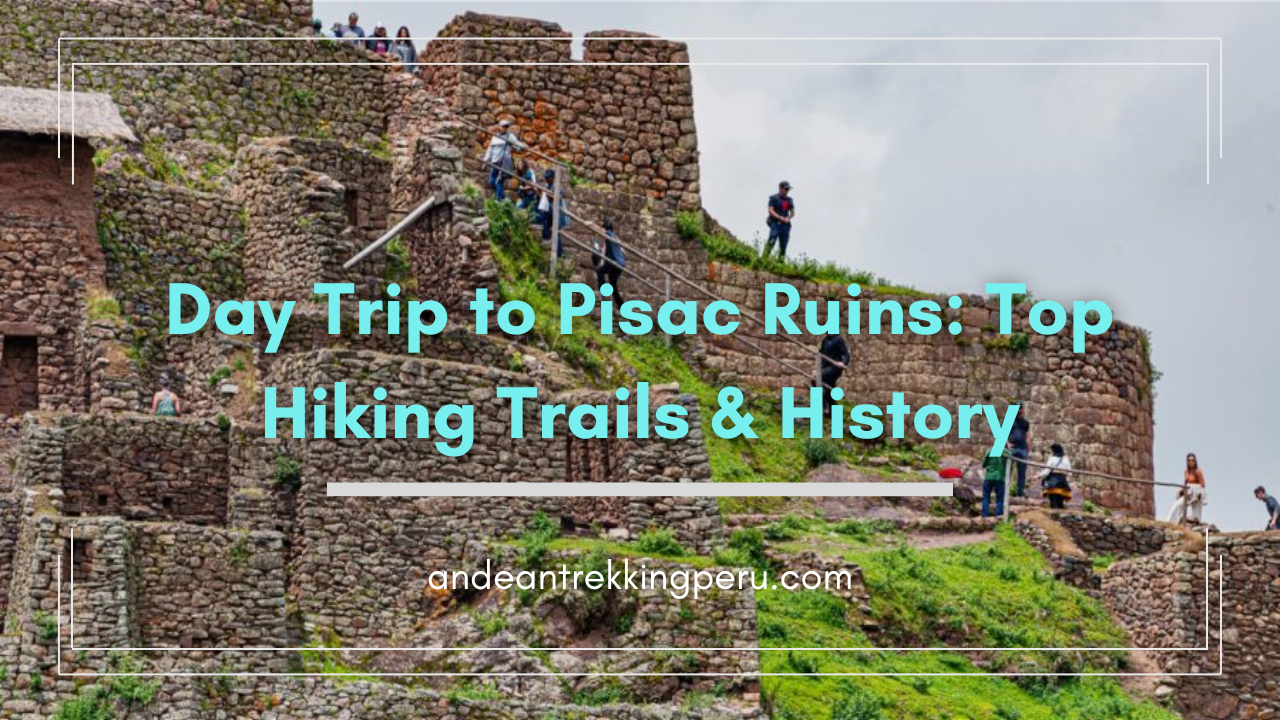
You’re in Cusco, you’ve got a free day, and someone says, “Pisac.” Do you picture a quick stop, a few stone walls, then back to town? Yeah… that’s not how it goes. The Pisac ruins feel like a whole Inca neighborhood stretched across a mountain—terraces, trails, lookout points, and quiet corners where the valley breeze does most of the talking.
And the best part? You can make it as chill or as leg-burny as you want. That’s rare.
So, what’s the big deal with Pisac?
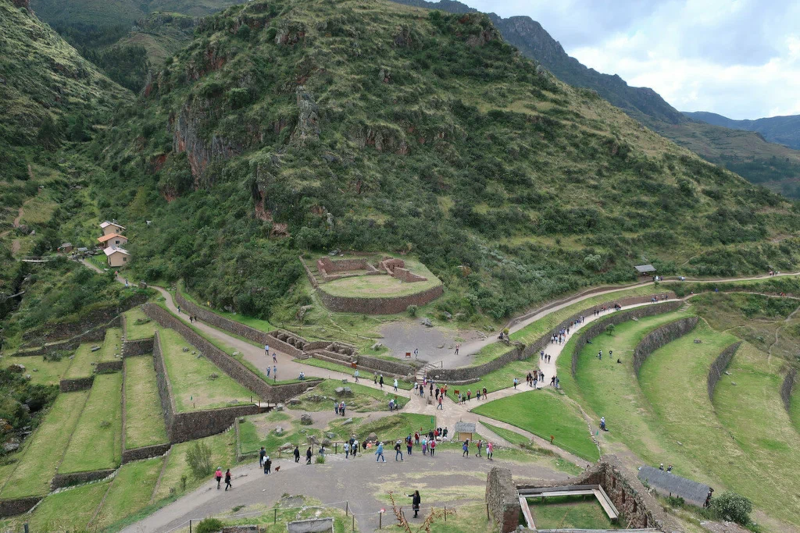
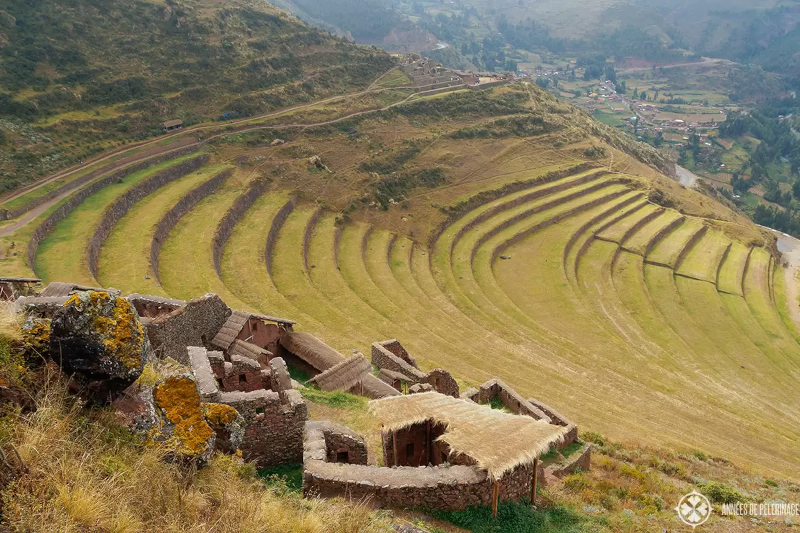
Pisac isn’t one single “wow” object. It’s a system. The terraces alone look like someone drew green and stone ribbons down the slope. Then you notice the paths. Then the way one area feels practical—like an operations zone—and another feels ceremonial, almost like it has its own mood.
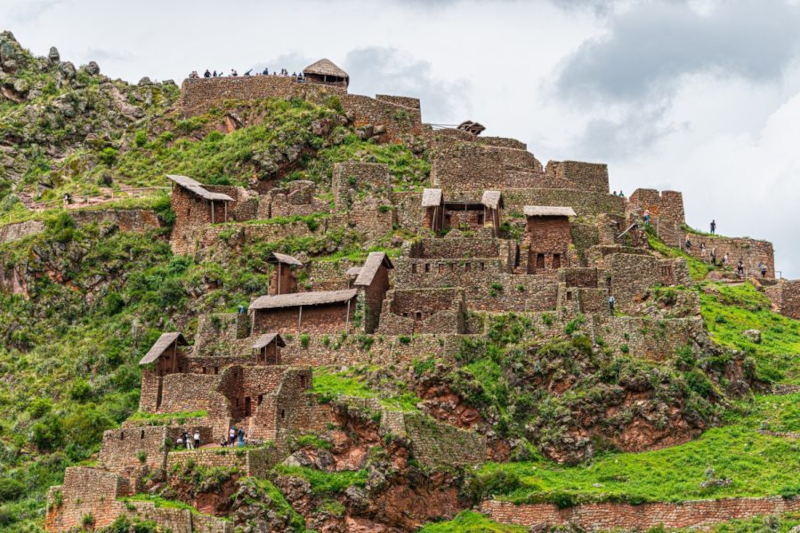
It’s also one of those sites where movement is the point. You don’t stand still for long. You walk, you stop, you look out, you walk again. That rhythm is basically built into the landscape.
And yes, it’s photogenic. But the real “wow” is how planned it feels. Not cold-planned. More like… smart-planned. Like the Incas were running a long-term program and someone actually managed the scope.
Mini history, no lecture vibes
Here’s the simple version: the Incas built big, they built fast, and they built with purpose. Pisac is often connected with the era of major Inca expansion, when engineering wasn’t a side hobby—it was statecraft.
What you see up on that ridge is a mix of work and meaning. Terraces helped grow food and stabilize steep slopes. Housing and storage supported daily life. Ceremonial areas added that other layer—belief, power, ritual, the stuff that makes a place more than a set of buildings.
And then history did what it does. Spanish arrival changed settlement patterns and pushed life down into the valley. The modern town below and the ruins above feel like two chapters of the same book. Different tone. Same setting.
Getting there without burning your whole morning
From Cusco, Pisac is a pretty clean day-trip move. Think of it like a short commute with better scenery. You can go by colectivo, taxi, or a tour. If you’re the type who likes control (hello, fellow planners), a taxi gives you flexibility and fewer “we’ll wait 40 minutes for the group” moments.
There’s usually a decision point that shapes your day:
- Go straight to the upper entrance if you want your energy spent on exploring, not climbing.
- Start in town if you want the full uphill experience and you’re already acclimatized.
Both are valid. This is not a moral test. It’s logistics.
Choose your adventure (aka: the hiking routes)
Pisac has a few classic ways to do it, and each one comes with a different “cost.” Not money-cost. Body-cost. Time-cost. Knee-cost.
1) The upper ruins circuit: the smart-and-steady option
This is the best route if you want to see a lot without turning the day into a fitness event. You arrive high, then wander through terraces, viewpoints, and stone structures with plenty of places to pause.
It still feels active. The steps are real. The paths are uneven. But the intensity is manageable, which matters more than people admit.
If you’re traveling with someone who’s still “getting their sea legs” at altitude, this route keeps the mood light. Nobody wants a day trip that turns into a headache-and-silence situation.
2) The ridge walk: where the site starts whispering
As you move along the ridge, the ruins start feeling less like an overlook and more like a place with rooms, corners, and flow. You’ll see tighter stonework and spaces that feel intentionally set apart.
This is where you slow down. Not because it’s dangerous (though watch your footing), but because the details reward attention. Doorways frame the valley. Walls create lines that guide you. It’s like someone designed the user experience—centuries before anyone used that phrase.
3) Hike down to Pisac town: the “yes, my knees noticed” route
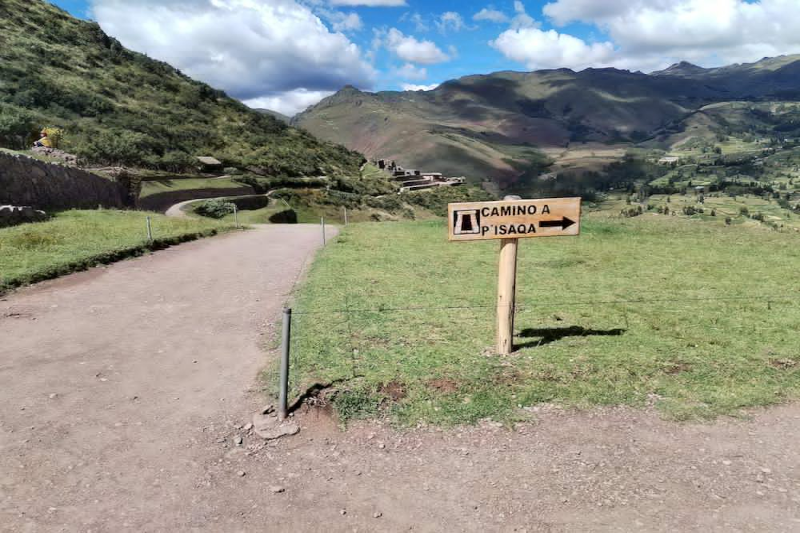
Starting high and hiking down is popular for a reason. You get the ruins first, then you descend into the modern world. It’s a satisfying arc. Also, downhill is easier on the lungs.
But here’s the mild contradiction: downhill can be harder. Your knees and ankles do more work, especially on stone steps. So take it slow. This is not a race. Nobody’s tracking your pace on a dashboard.
When you hit town, you’ll be glad you saved some energy. Pisac town is where you can eat, wander, and decompress. More on that in a second.
4) Hike up from town: for people who like “earned” views
Hiking up from the valley is the most demanding common option. It can also be the most satisfying. You start with everyday streets and end in an ancient complex above the clouds. That’s a pretty good narrative.
Still, treat this like a work sprint, not a casual stroll. Pace yourself. Build in breaks. If you’re the “I can push through” type, remember: altitude doesn’t negotiate. It just is.
Altitude: the silent stakeholder in your day
Let’s talk Pisac altitude, because it affects everything. You might feel fine. You might feel weirdly winded. You might feel both within ten minutes.
Here’s a helpful way to think about it: altitude is like a bandwidth limit. You still function, but you can’t run as many heavy tasks at once. Speed-walking uphill while chatting and carrying a big bag? That’s three tasks. Your system might buffer.
So do the basics:
- Drink water. Small sips, often.
- Eat something simple. Heavy meals can feel like a mistake up there.
- Start slower than you think you need to. You can always speed up later.
- Watch for the “off” signs: headache, nausea, dizziness, a weird sense of fatigue.
If you’re fresh from sea level, give yourself some grace. It’s not weakness. It’s physics.
A small digression: why terraces are basically risk management
Terraces look beautiful. They’re also a practical solution to a messy problem: steep slopes. Without terraces, you get erosion, unstable ground, and limited growing space. With terraces, you get flat planting areas, better water control, and more stability.
In modern work terms, terraces are infrastructure. Not glamorous infrastructure, but the kind everything depends on. The Incas weren’t decorating a mountain. They were running a high-altitude operation with weather, soil, and gravity all trying to ruin the plan.
Once you see terraces that way, you stop treating them like scenery. You start treating them like evidence.
What to bring (and what you’ll regret not bringing)
You don’t need expedition gear. But you do want a kit that keeps the day smooth. Think “lightweight travel ops.”
- Shoes with grip. Smooth soles and stone steps don’t mix.
- Water. More than you think, especially in dry season.
- Sun protection. High-elevation sun can feel a bit rude.
- A layer. Mornings can be cool; ridges can get windy.
- Small cash. Transport, snacks later, small purchases in town.
- Your phone, charged. And maybe a power bank—battery drains faster in the cold.
One more real-world tip: download offline maps before you leave Cusco. It’s boring advice. It’s also the advice that saves you when signal gets patchy.
And then… Pisac town (where the ruins turn into a full day)
After the ruins, the town is a natural exhale. Markets, small cafes, colorful textiles, that hum of people buying things they absolutely don’t need (and will treasure anyway). Even if you’re not a “shopping person,” it’s worth a wander.
You might find alpaca sweaters. You might find hand-carved little figures. You might find a vendor who makes you taste something and suddenly you’re holding a bag like, “Well, I guess this is happening.” It’s fine. That’s travel.
If it’s rainy season, you’ll also see the Sacred Valley do its moody thing—clouds snagging on mountain edges, quick showers, then bright sun again. Dry season has that crisp, clean light that makes photos look unfairly good. Both are nice. Different vibe, same valley.
A note on respect (quick, but important)
Pisac is not a theme park. It’s an archaeological site with fragile stonework and steep edges. Be the person who doesn’t climb on walls “for the shot.” Stay on paths where you can. Pack out what you pack in. Keep noise low in quieter areas.
That’s not being strict. That’s being decent.
Putting it all together
A day trip to the Pisac Inca ruins can feel easy… and it can feel intense. Weirdly, it can be both. If you start high and wander, it’s a relaxed day with big views. If you hike up from town, it’s a workout with history as your reward. Either way, the site delivers.
Go with a plan, but leave room for detours—an extra viewpoint, a longer pause, a late lunch in town. Those unplanned moments are often the whole point, right?
And when you’re back in Cusco that night, a little dusty and a little tired, you’ll have that satisfying feeling: you didn’t just see ruins. You walked through a living layout of how an empire made a mountain work.


