+51 980 852 691 +51 930 842 108 [ES] info@andeantrekkingperu.com Calle Marques 231 Int. 115. CC Sotomayor.
Contact Us

Chinchero Inca Ruins Tour: Sacred Valley Experience

The Sacred Valley of the Incas, known as the “Valle Sagrado,” is a fertile region that lies between Cusco and Machu Picchu in Peru. This area was once the heartland of the Inca Empire, rich in natural resources and boasting a mild climate ideal for agriculture. Today, it remains a stunning testament to the Incas’ ability to harmonize with their environment.

Historical Significance

The Sacred Valley was not just a geographical location but a cornerstone of Inca society. It was pivotal due to its strategic location, serving as the agricultural, economic, and spiritual center of the empire. The Incas developed innovative agricultural techniques here, and their legacy is still visible in the valley’s terraces and ancient irrigation systems.

Natural Beauty

The Sacred Valley is a breathtaking landscape of lush valleys, towering mountains, and meandering rivers. The Urubamba River runs through its heart, providing life to the region and adding to its scenic beauty. The picturesque setting offers countless opportunities for photography, hiking, and exploration, making it a must-visit for nature lovers.

Cultural Continuity

Despite the passage of centuries, the Sacred Valley remains a living testament to the traditions of the Andean people. The local communities continue to practice age-old customs, from traditional agriculture to spiritual ceremonies. Engaging with these communities offers a unique opportunity to witness how ancient traditions have evolved but still thrive today.

The Significance of Chinchero

Chinchero inca ruins

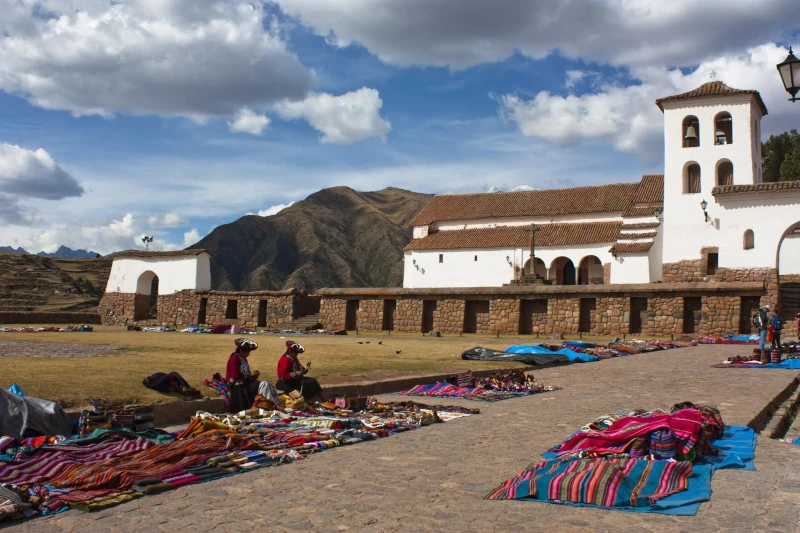
Chinchero, often referred to as the “Birthplace of the Rainbow,” sits at an altitude of 3,762 meters (12,343 feet) and is one of the most picturesque villages in the Sacred Valley. The town is not only famous for its Inca ruins but also for its vibrant Sunday market, where local artisans sell traditional crafts. Here, the echoes of the past blend seamlessly with the present, offering visitors a glimpse into the rich tapestry of Andean life.

Chinchero’s Unique Location

Chinchero’s location at a high altitude provides breathtaking views of the surrounding mountains and valleys. This vantage point not only offers stunning vistas but also a strategic advantage that was utilized by the Incas. The town’s elevated position made it an ideal location for both agriculture and defense.

The Sunday Market Experience

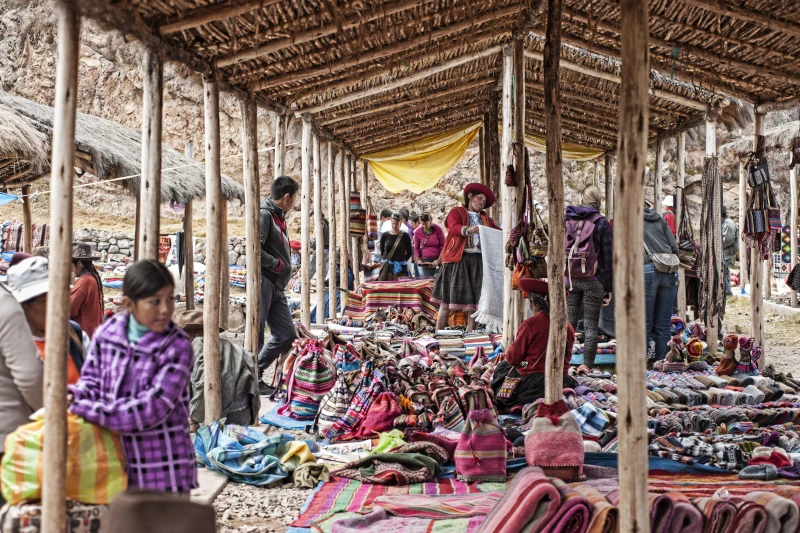
The Sunday market in Chinchero is a vibrant display of colors, sounds, and scents. Local artisans gather here to sell handcrafted textiles, pottery, and jewelry, each piece reflecting the rich cultural heritage of the region. Visitors can immerse themselves in the lively atmosphere, bargaining for unique souvenirs and witnessing the artisans at work.

Cultural Synthesis

In Chinchero, the past and present coexist harmoniously. The town’s architecture, with its colonial influences and Inca foundations, tells a story of cultural synthesis. As you stroll through the streets, you can observe the layers of history and the enduring spirit of the Andean people who call this place home.

Unveiling the Chinchero Inca Ruins

Chinchero inca ruins

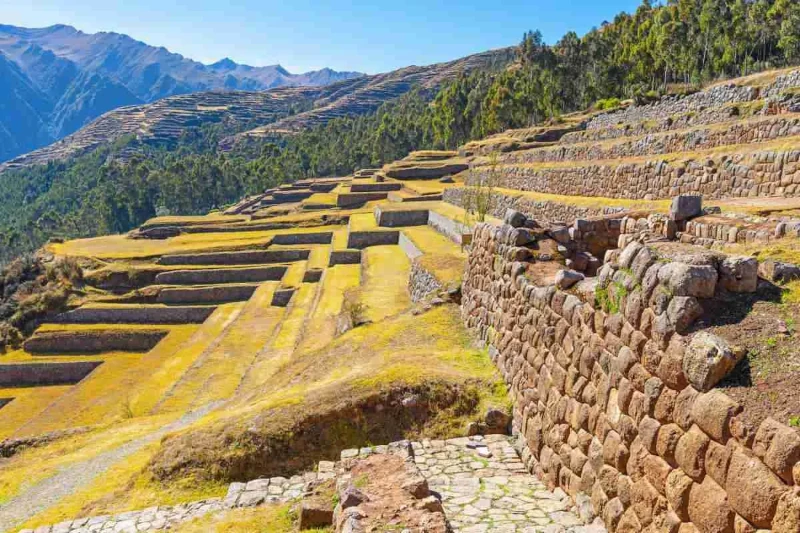
The Chinchero Inca Ruins are a fascinating complex of terraces, stone walls, and agricultural platforms. These structures demonstrate the Incas’ advanced understanding of architecture and agriculture. Walking through the ruins, one can almost hear the whispers of ancient farmers who once cultivated this land, making use of the sophisticated terrace systems to grow crops like potatoes and maize.

Architectural Ingenuity

The ruins of Chinchero reveal the Incas’ exceptional architectural skills. The stonework is precise, with each stone cut and fitted perfectly without the use of mortar. This mastery not only highlights their craftsmanship but also their understanding of engineering principles that allowed the structures to withstand natural disasters.

The terraced fields at Chinchero are a testament to the Inca’s agricultural prowess. These terraces were designed to maximize arable land in the mountainous terrain, providing optimal conditions for diverse crop cultivation. The ingenuity of these systems ensured food security and supported the empire’s expansion.

Spiritual Significance

Chinchero was more than just an agricultural hub; it was also a royal estate belonging to Tupac Inca Yupanqui, one of the most significant Inca rulers. This site served as a vital political and religious center, where important ceremonies and gatherings were held. The presence of ceremonial baths and shrines within the ruins suggests that Chinchero was a place of spiritual significance.

The Living Culture of Chinchero

While the ruins offer a glimpse into the past, the vibrant culture of the Quechua people brings the history of Chinchero to life. The Quechua are the direct descendants of the Incas, and their customs, language, and traditions have been passed down through generations. Engaging with the local community provides a deeper appreciation for the continuity of cultural heritage in this region.

Language and Oral Traditions

Quechua, the ancient language of the Incas, is still spoken by many in Chinchero. It is a living language, rich with expressions and idioms that reflect the worldview of the Andean people. Participating in a Quechua language workshop or engaging with locals in their native tongue can be a rewarding experience, offering insight into the linguistic legacy of the Incas.

Chinchero is renowned for its traditional weaving techniques, which have been preserved over centuries. The vibrant textiles produced by local artisans are not just beautiful; they are also a form of storytelling. Each pattern and color holds significance, narrating tales of history, mythology, and daily life. Visitors can participate in weaving workshops, learning about natural dyes and traditional methods, and perhaps even creating their own piece of Andean art.

Culinary Traditions

The culinary traditions of Chinchero offer a taste of the region’s rich agricultural heritage. Local dishes, often prepared with ingredients sourced from the surrounding fields, are a testament to the ingenuity and resourcefulness of the Andean people. Sampling traditional foods provides a delicious way to connect with the culture and history of the area.

Chinchero inca ruins

Exploring Nearby Attractions

While Chinchero is a highlight of the Inca Valley, it is by no means the only attraction. The region is dotted with remarkable sites that further illuminate the ingenuity of the Inca civilization.

Moray: The Agricultural Laboratory

Moray, located not far from Chinchero, is an archaeological site featuring a series of concentric terraces. These terraces form a large amphitheater-like depression and are believed to have been an agricultural research station. The Incas used this site to experiment with different crops and microclimates, showcasing their sophisticated understanding of agriculture.

Maras: The Salt Mines

The Maras salt mines, or “Salineras de Maras,” are a marvel of ancient engineering. Thousands of salt pools cascade down the hillside, fed by a subterranean stream. This site has been in use since pre-Inca times and continues to produce salt today. Visiting Maras provides insight into the resourcefulness of the Andean people and their ability to adapt to their environment.

Ollantaytambo: The Living Inca Town

Ollantaytambo is a town that serves as a living museum of Inca architecture and urban planning. The town’s streets are laid out in their original Inca design, and its fortress offers stunning views of the valley. Exploring Ollantaytambo provides a deeper understanding of how the Incas integrated their cities into the natural landscape.

Planning Your Visit

When planning a tour of the Chinchero Inca Ruins and the surrounding Sacred Valley, consider hiring a knowledgeable guide who can provide context and enrich your experience with historical and cultural insights. The best time to visit is during the dry season, from May to September, when the weather is ideal for exploration.

Selecting an experienced guide can significantly enhance your visit to the Sacred Valley. A knowledgeable guide will not only provide historical context but also share lesser-known stories and insights, making your journey more enriching and memorable. Look for guides with positive reviews and a deep understanding of the local culture.

Optimal Itinerary Planning

Planning your itinerary carefully can ensure you make the most of your visit to the Sacred Valley. Consider dedicating several days to explore the various sites, allowing ample time to immerse yourself in the culture and history. Incorporating a mix of guided tours and independent exploration can provide a balanced experience.

Travel Tips and Essentials

Chinchero inca ruins

When visiting the Sacred Valley, it’s essential to prepare for the high Cusco’s altitude and varying weather conditions. Pack layers, stay hydrated, and allow time to acclimatize to ensure a comfortable and enjoyable trip. Don’t forget your camera to capture the stunning landscapes and unforgettable moments.

In conclusion, the Chinchero Inca Ruins Tour offers a unique opportunity to delve into the heart of the Sacred Valley, exploring not only the architectural marvels of the Inca Empire but also the enduring traditions of the Quechua people. This journey is not just a step back in time but a celebration of cultural continuity, inviting travelers to connect with the past and appreciate the vibrant tapestry of Andean life.

Through this tour, you will gain a deeper understanding of the Inca civilization and the living culture of their descendants, making it an enriching experience for anyone interested in history, culture, and the majesty of the Andes. Whether you’re exploring ancient ruins, engaging with local artisans, or simply soaking in the stunning landscapes, the Sacred Valley promises a journey of discovery and wonder.