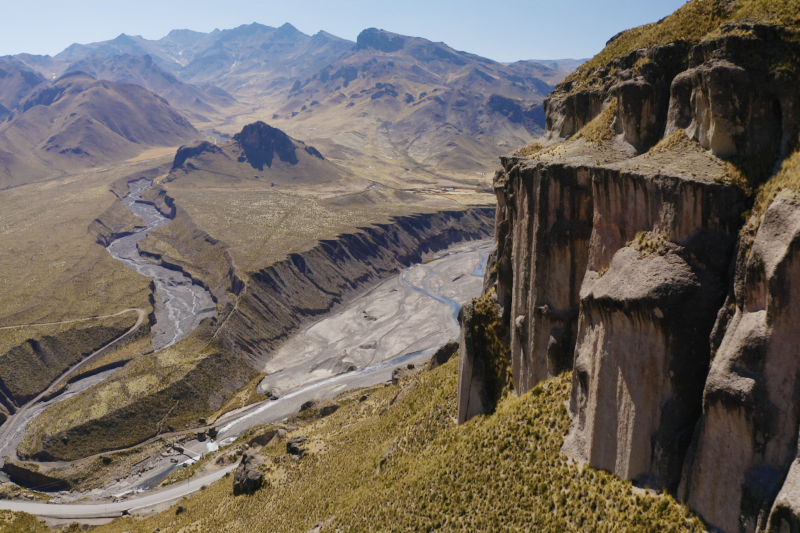
Colca Valley isn’t the kind of place you “see” and move on. It’s the kind of place that makes you stop mid-sentence, squint into the distance, and go, wait… is that real? One minute you’re on a high Andean plain with vicuñas grazing like they own the place; the next, the ground seems to fall away into a giant crease in the earth.

And here’s the funny part: Colca Valley Peru still feels like a bit of a secret compared with Peru’s big-name hits. That’s not a complaint. It’s a perk. If you’ve been craving a trip that feels scenic and lived-in—less postcard, more “real life happening right here”—Colca delivers.
You’ll hear a few names tossed around: Colca Valley, Colca Canyon, and the Spanish Canyon de Colca. Don’t overthink it. People are pointing to the same spectacular region, just from different angles.
Located in southern Peru, Arequipa Region, in the Andes, Colca is located. Most trails begin at Arequipa, which ought to be visited at its own minimum length of time; the town is famous for its completely acceptable coffee, patronage of the white-stone buildings and its food scene, which will otherwise beat you over the head with regard to bland lunches. You then roll down the valley through Chivay and other local villages and proceed down towards viewpoints and trail heads such as Cabanaconde.
It sounds straightforward. It also isn’t—because altitude and distance have a way of stretching time. A “few hours” on a map becomes a full-on travel block in your calendar. Plan for it like you would a workday: fewer meetings, more buffers.
Speaking of numbers, the numbers: The canyon, at their deepest points averaged at about 3270 meters or 10,725 feet. Well over 2,000 times deeper than the Great Grand Canyon! Wild, right?
But depth isn’t only a bragging-rights stat. You feel it in your body and in the weather. The rim can be chilly and windy; the bottom can feel warm, even lush. It is somewhat akin to a “layer cake” of microclimates that sequentially have different moods.
The Andes Mountains are also geologically active, so the ground doesn’t seem to be set in stone. On certain days the fine feathery column can be seen from afar rising from Sabancaya Volcano. It’s a calm reminder that the earth is still doing earth things—slow, steady, and unstoppable.

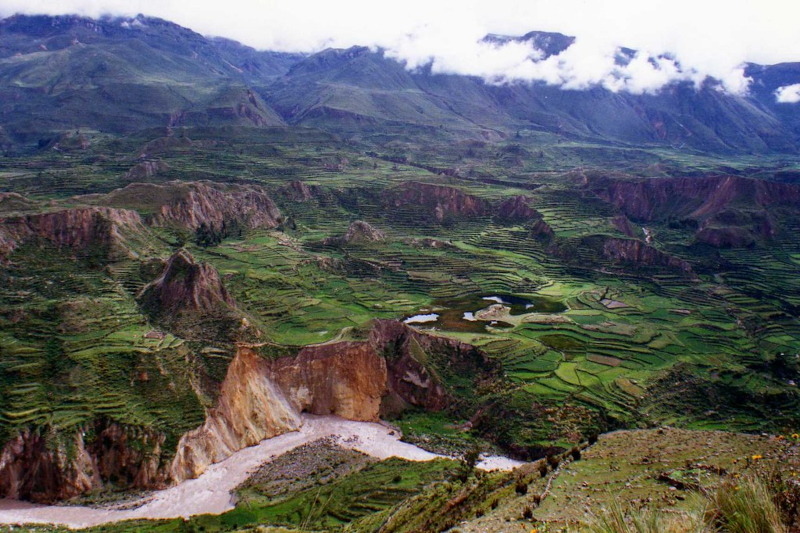
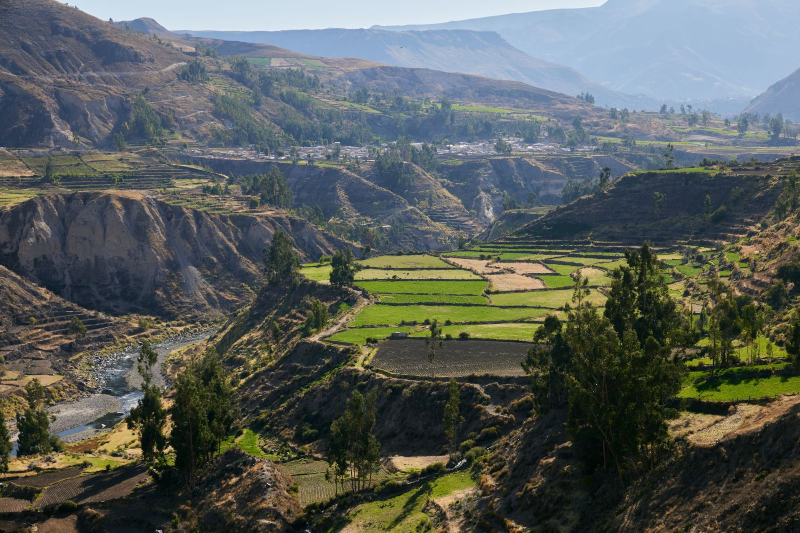
Here’s the thing: Colca isn’t only rock and sky. People have shaped this valley for ages, and you can see it everywhere. Those stepped green shelves on the slopes? They’re agricultural terraces—many built long before modern engineering had fancy software and project timelines. The Collagua and Cabana peoples farmed and lived here well before the Inca expansion, and the terraces still do their job today: holding soil, managing water, and making steep land usable.
It’s tempting to treat terraces as scenery. But they’re more like infrastructure—ancient, clever infrastructure. And honestly, when you’re standing there watching someone herd animals across a slope that looks impossible, it shifts your perspective. You start thinking less about “tourist attractions” and more about how communities keep moving, year after year, up here.
Then there are the towns. The white volcanic stone here is used for many of the churches built during the colonial period and the facades are carved and appear to be surprisingly detailed for such a remote location. If you enjoy History, then Hang around. It’s still worth the 5 minutes to go in, it’s quiet, it is the experience of the quiet.
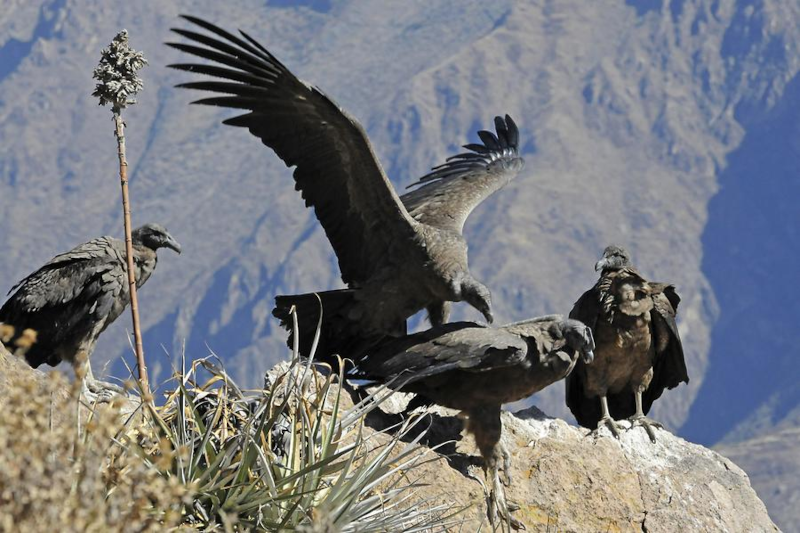
Let’s talk about condors. One of the moments that seems over-ambitious until it actually does happen — a glimpse of a condor, or Andean Condor, the majestic bird that reigns the sky above the landscape of the canyons. It has a wingspan of approximately 3.2m (10.5ft) across. They don’t flap much. They float, using rising warm air like a pilot using lift.
The classic spot is Cruz del Condor. Go out in the morning (about 8-10 AM, depending on the season and time of day) when the air currents begin to stir with air currents, and the sun begins to warm the canyon walls. The condors sometimes fly within close range where you can hear wind change. You’ll probably go quiet without meaning to. It’s not dramatic. It’s just… a lot.

If you only do viewpoints, Colca is still impressive. But hiking down into the canyon changes the whole story. It’s also where many trips get real—knees, water, sun, and that “why did I think this was a good idea?” moment halfway down.
A popular route starts at Cabanaconde and heads toward Sangalle, often called the oasis. The descent is steep and dusty. Then, almost unfairly, the bottom turns green, with palms and pools and the sound of the river nearby. It’s a place you want to spend one extra night that’s on your calendar or not.
The decision of whether to join a guided trek, or to go on the solo trek is like that of making a hire-a-consultant or account-in-house decision:
Neither is “better.” It depends on your comfort with risk management at altitude, and how much you enjoy planning on the fly.
After hiking, your body may feel like it logged a full week of leg day. That’s where the La Calera hot springs near Chivay come in. Warm mineral water, mountain air, and the simple joy of not carrying a backpack for an hour—hard to beat.
Fees change, but it’s usually in the ballpark of 15–20 soles. Bring a towel and some patience; it can get busy. Still, even with other travelers chatting around you, the soak does what it needs to do. Muscles relax. The brain stops racing. You remember you’re on a trip, not a deadline.
Colca is manageable with a bit of planning. Not obsessive planning—just enough to keep your trip from turning into a series of small problems.
For those that have a preference, the dry season from May to November is the more typical choice: fewer clouds, smoother riding trail conditions and, improved condor viewing prospects. However, nights are cold. Like “why didn’t I pack that extra layer?” cold.

The bus, shared van or tourist shuttle from Arequipa will take you to Chivay. It is usually a drive through Salinas and Aguada Blanca where you can see vicuñas. You will also climb across high passes just above Patapampa (approx. 4910 m / 16100ft). This means that if you think you won’t, you’ll know it’ll be there.
Hikes can fail in spite of being fit, unfit, young or old, whatever; locals call it soroche and I don’t like how it has to do with altitude.I hate how outside people are told that they have altitude sickness (locals call it soroche) and it applies regardless of fitness or lack of it, young or old, etc. Areal acclimatization for a couple of days in Arequia, take water, and be cautious about the amount of alcohol consumed is very practical (and keep the first day of the valley soft).
For patients with mild symptoms, many travelers will go to the extent of searching for and using the coca tea. If you understand that you are sensitive to altitude, consult your doctor before you travel and ask about the use of medication.
I bet Colca’s weather can change quickly if you are not prepared for the high altitude sun. Some key ingredients are all that is needed:
Colca Canyon is in southern Peru, in the Arequipa Region. Most visitors base from Arequipa city, then travel to towns like Chivay and Cabanaconde to reach viewpoints and trailheads.
It’s reported that the deepest parts are approximately 3270 meters (10725feet), but that varies between rim to river.
If you are an achromatic type, a Culture Enlightener and a Wildlife Moments’ enthusiast (Hello Condors!), it’s worth it. There’s a price to be paid: mornings, miles of road and an elevated aircraft. If all that sounds like a deal breaker, you may better enjoy a slower journey which focuses on Arequipa.
One day works for viewpoints and a quick loop. Two to three days is more comfortable if you want hiking time, a hot springs stop, and less rushing.
They’re two ways of referring to the same destination. “Canyon de Colca” is the Spanish wording for Colca Canyon, while “Colca Valley” is often used when talking about the inhabited, terraced stretches along the river.
Colca can feel massive and quiet at the same time. You’ll get the headline views, sure. But you’ll also get smaller moments: a market stall with woven textiles, a shared van ride with music playing too loud, the sudden hush when a condor passes overhead.
It’s not the easiest trip in Peru. And that’s partly why it sticks. With a little planning, a little patience, and a willingness to take the valley on its own terms, Colca Valley—and Colca Canyon, and Canyon de Colca—can end up being the part of Peru you talk about most when you’re back home.