
You know that feeling when a trip is already great… and then something happens that flips it into “I’ll be talking about this for years”? Wiñay Wayna does that for a lot of people on the Inca Trail.
It’s a set of Inca ruins built on a steep green slope, with terraces, stone buildings, and water channels. It sits close to Machu Picchu, but it doesn’t feel like a warm-up act. It feels like the plot twist.
And yes, you’ll see it spelled a bunch of ways: Wiñay Wayna, Winay Wayna, Wiñaywayna. Same place. Same wow.
So… what is Wiñay Wayna, really?
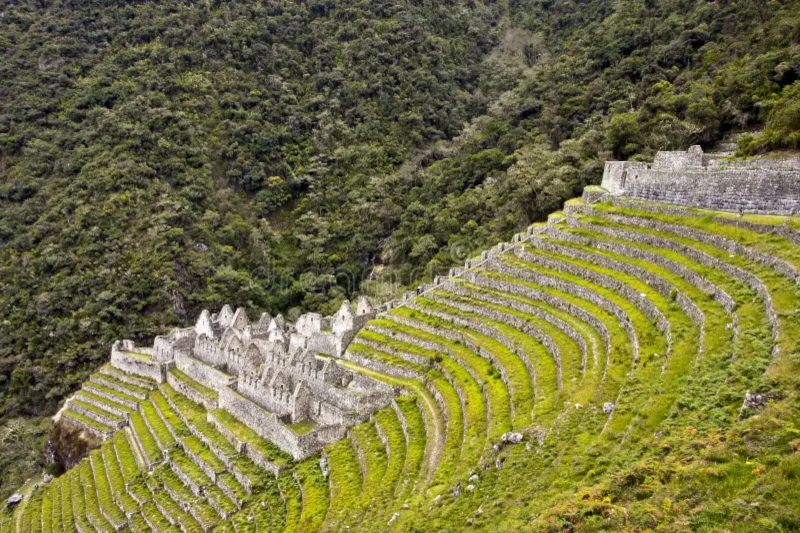
Wiñay Wayna is an Inca site along the trail network that leads toward Machu Picchu. People call it “ruins,” but that word is a little flat. The place still works as a design.
Here’s what you’re looking at:
- A big stack of agricultural terraces that step down the hillside like a stone staircase for plants.
- Stone structures that look like living spaces, work areas, and gathering spots.
- Water features—channels and fountains—that show how seriously the Incas took flow, drainage, and clean water.
It’s also one of those places where the environment does half the storytelling. You’re in cloud forest territory. It’s damp. It’s lush. Mist shows up and disappears like it has a schedule to keep.
What is Wiñay Wayna known for?
If you ask hikers what stands out, you’ll hear the same themes on repeat. Terraces. Water. Setting. And that “how did they build this here?” disbelief.
Wiñay Wayna is known for:
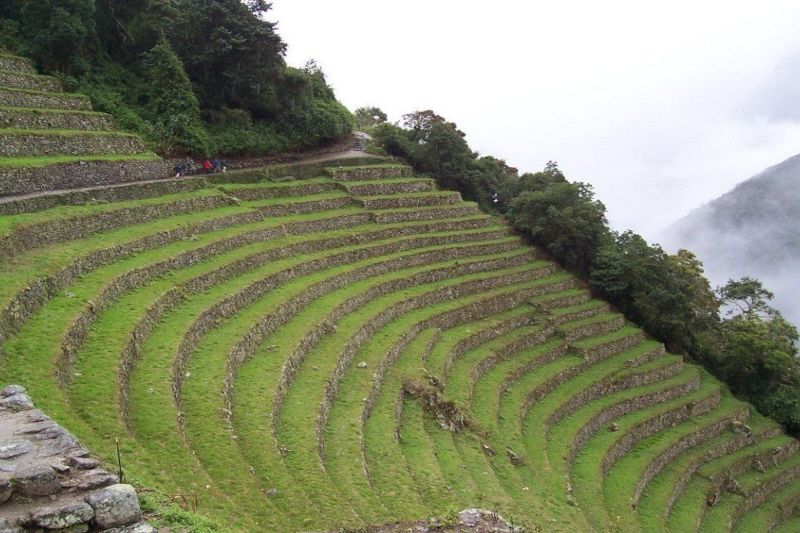
- Terraces with serious drama. They’re steep, wide, and oddly graceful. You don’t just see them—you feel their scale.
- Stonework that reads like craftsmanship. Even when the shapes are simple, the fit is confident.
- Water management. The site doesn’t fight water. It routes it, controls it, and puts it to work.
- Location, location, location. You’re close enough to Machu Picchu to sense the finish line, but still deep in the trail’s rhythm.
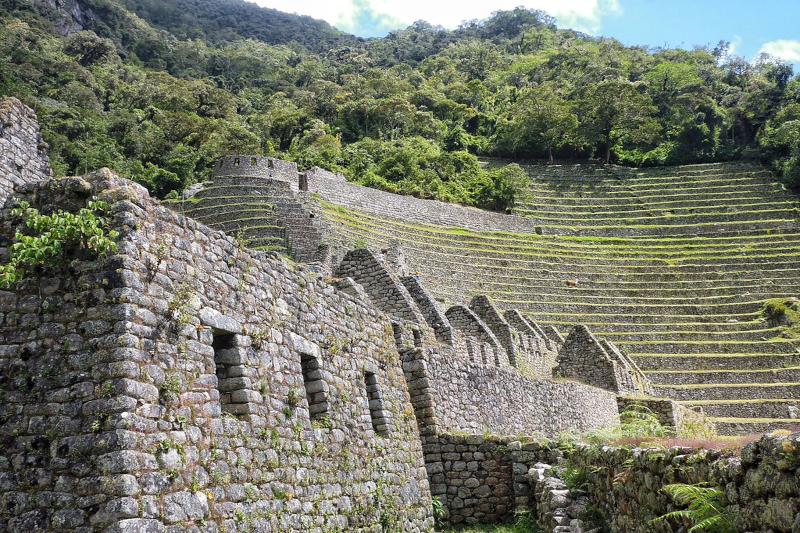
Also, the name gets people. Wiñay Wayna is often translated as “forever young.” A little poetic, sure. But when you see green growing through stone lines, it kind of lands.
Why it hits harder on the Inca Trail
Wiñay Wayna isn’t just impressive. It’s strategically impressive, because you usually reach it after you’ve earned it.
By then, your legs have done the work. You’ve climbed. You’ve descended. You’ve dealt with stairs that feel like they were designed by someone who hated knees. And you’ve moved through different microclimates like you’re switching tabs in a browser—high Andes, then warmer valleys, then the cool wet green of the cloud forest.
So when Wiñay Wayna shows up, it doesn’t feel random. It feels like the trail’s “final review meeting” before the big launch: Machu Picchu.
That’s why people remember it. Not just as a stop, but as a turning point.
Let’s talk terraces
The terraces at Wiñay Wayna are the headliner. They’re beautiful, yes. But they’re also practical. That’s the Inca thing: the aesthetic and the operations plan are the same document.
In simple terms, terraces help with:
- Slope stability. They reduce landslide risk by breaking the hillside into supported steps.
- Drainage. They guide water instead of letting it tear down the mountain.
- Growing space. They create flatter soil zones in a place that’s mostly “vertical.”
If you like work talk, think of the terraces as a system that manages risk and resources. It’s stakeholder-friendly infrastructure. Except the stakeholders are gravity, rain, and time.
And if you don’t like work talk? No worries. Here’s the casual version: the Incas were basically turning a steep hillside into a usable, organized space. Like building a tiered garden on the side of a cliff. Because they could.
And then there’s the water… quietly stealing the show
Terraces get the photos. Water gets the respect, once you notice it.
At Wiñay Wayna, you’ll see channels and fountain-like features. It’s not just “water happens here.” It’s “water is routed here.” That difference matters.
From an engineering angle, water control is the invisible backbone of a mountain site. Too much water, in the wrong place, can wreck a slope. Not enough water, or dirty water, can make daily life harder. So the Incas treated water like a core system, not an afterthought.
And here’s a small digression that matters: on the Inca Trail, you’ll feel how water shapes everything. It shapes the plants. It shapes the stone. It shapes the air. It’s part of why this section of the trek can feel so alive.
“Forever young,” orchids, and why the name feels right
The “forever young” translation isn’t just a cute trivia fact. It’s a vibe. The site sits in a place where things grow fast, decay fast, and regrow fast. Moss creeps. Leaves drop. New leaves show up. The whole setting is a loop.
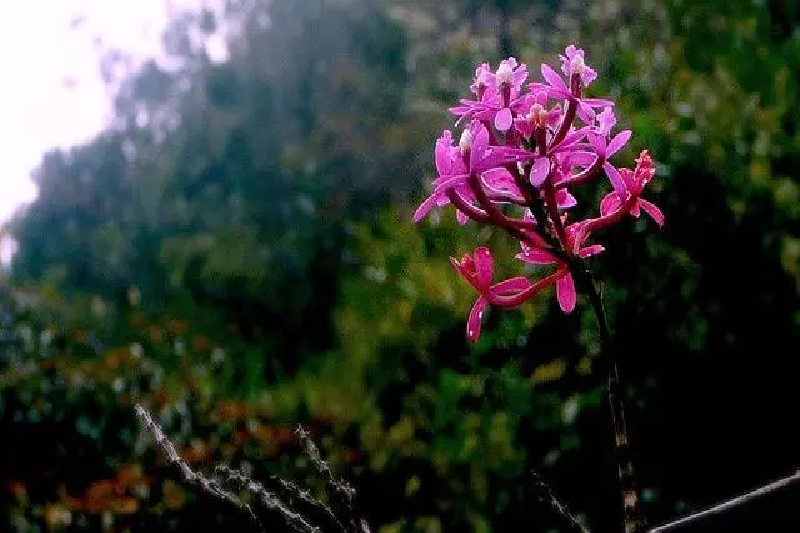
People also connect Wiñay Wayna with an orchid that shares the name. You might not spot it (plants don’t do photo ops on command), but the idea still works: delicate life, stubborn life, life that thrives in mist and shade.
And that’s the emotional hook, if you want one. The site is old. The landscape is not done. It keeps going.
Okay, how do you “read” the site without rushing it?
Most people arrive excited and a little tired. That’s normal. But if you can slow down for even ten minutes, Wiñay Wayna starts to make more sense.
Try this simple flow:
- Start wide. Look at the full terrace sweep. Let your eyes follow the slope.
- Then go functional. Ask: where does water go? Where do people move?
- Then go detailed. Notice the stone joints, the wall angles, the way paths connect levels.
- Finally, zoom out again. Picture this as a working place, not a postcard.
It sounds basic, but it works. Wide. Functional. Detailed. Wide again. You’ll remember more, and you’ll take better photos, too.
Quick digression: the trail is a project plan, not just a hike
Here’s a thought that sneaks up on you: the Inca Trail isn’t a random line between points. It’s a designed route through space, effort, and meaning. Like a user journey, but with altitude.
Wiñay Wayna fits that design. It’s placed near the end, when you’re primed to notice how the Incas linked architecture to landscape. It’s also a morale boost. And honestly, morale is a resource on any long day.
So if you’re wondering, “Why not just take me straight to Machu Picchu?”—well, that’s kind of the point. The approach is part of the experience.
Practical stuff hikers actually care about
Because yes, the history is fascinating. But you also have a body, a backpack, and a weather forecast that may or may not be telling the truth.
- Expect humidity and quick shifts. Mist and drizzle can roll in fast in cloud forest zones.
- Manage your energy. Wiñay Wayna often lands late enough in the trek that you’ll feel it. Eat a little. Drink water and coco tea. Pace yourself.
- Stay on the paths. It protects the site and keeps you safer on steep edges.
- Respect the plants. Orchids and other cloud forest species can be fragile. Look, don’t pick.
One more small, useful digression: if you’re prone to altitude sickness, the overall trek planning matters more than people admit. Sleep, hydration, and pacing are boring topics—until they aren’t. Treat them like your personal risk management plan.
So is it the Inca Trail’s most incredible stop?
It depends on what gets you.
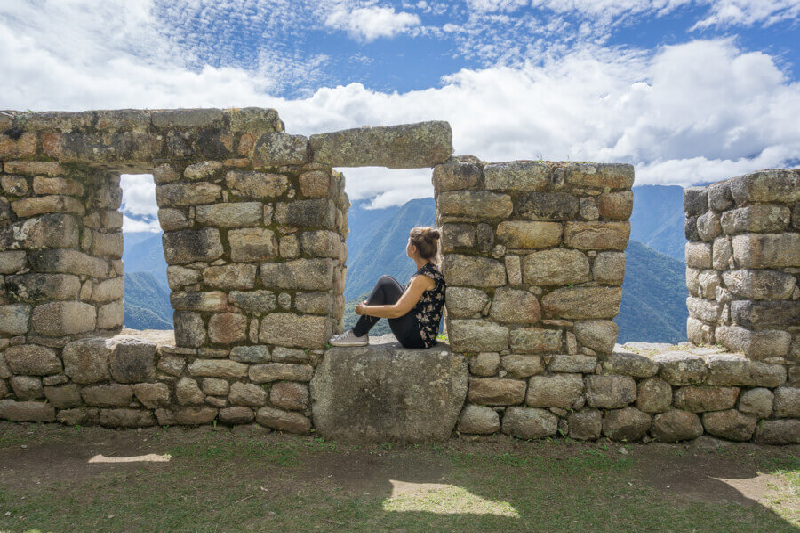
If you love big iconic scenes, Machu Picchu still wins. If you love high mountain drama, the passes can take the crown. But if you love the moment when design, nature, and effort click into one clear idea—Wiñay Wayna has a strong case.
It’s compact, but it’s layered. It’s beautiful, but it’s also smart. And it arrives when you’re open to being impressed, because the trail has already done its job on you.
That’s why it sticks. That’s why people bring it up later, even when they’ve posted the Machu Picchu photos.
Final takeaway
Wiñay Wayna isn’t just a scenic ruin. It’s a lesson in how the Incas worked with steep terrain, managed water, and built places that still feel intentional. It’s also a reminder that the Inca Trail is more than a route to a famous site. It’s a story that unfolds in stages.
And somewhere in that green mist, with terraces stepping down the mountain, you’ll probably think the same thing a lot of hikers think: How is this real?


