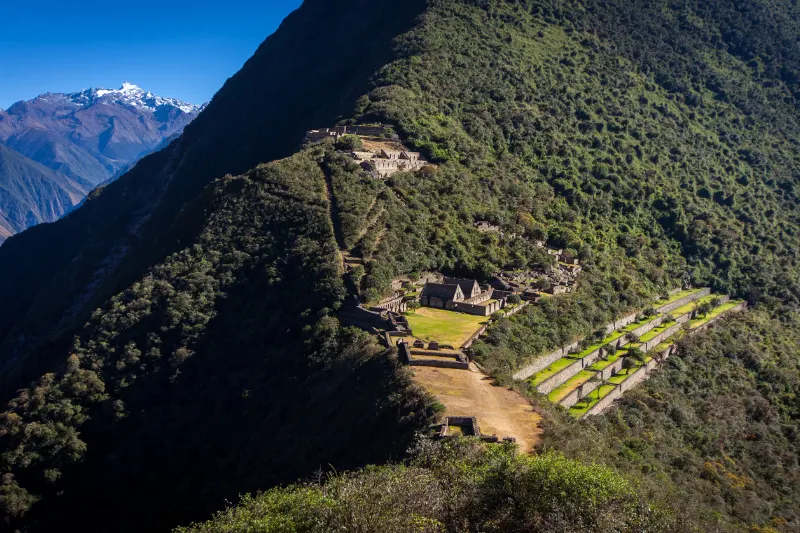
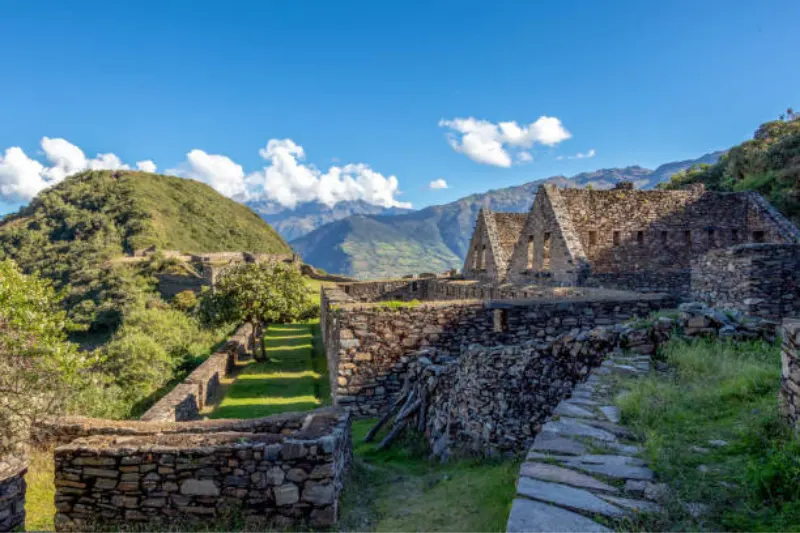
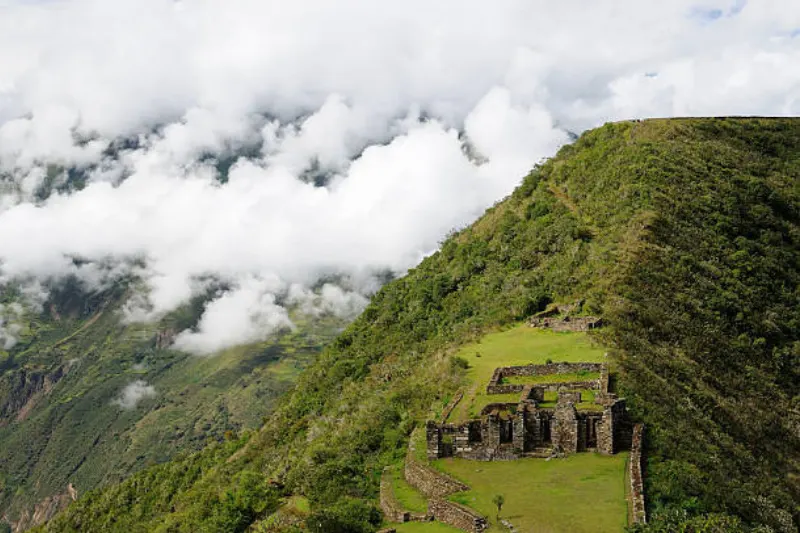
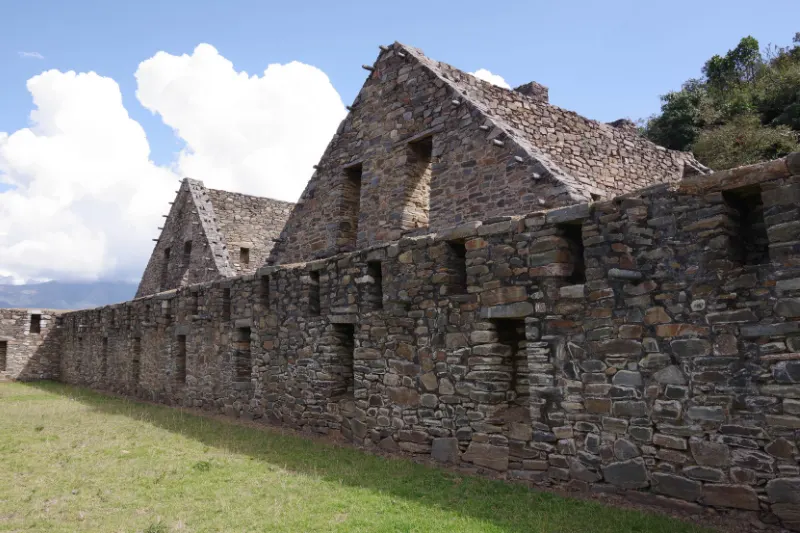
Morning mist, jagged peaks, canyon dropping away below. No buses, no groups, nobody. Stone ruins on a ridge acting like they’ve always owned that view. First impression and it doesn’t fade.
The choquequirao trek flies under the radar and always has. “Sister of Machu Picchu” is the tagline, though anyone who shows up quickly stops making that comparison. Different animal entirely. Fewer people, harder terrain, something that feels genuinely unfinished and alive.
Real commitment required before the first step on the peru choquequirao trek. A proper choquequirao tour works, independent planning works too. What doesn’t work is arriving underprepared and hoping for the best. This guide covers the parts that actually matter.

Where is choquequirao is the first search most people run after booking Cusco flights. Makes sense. Vilcabamba range, Cusco region, southern Peru, glaciated ridge sitting around 3,050 meters. Apurimac River directly below, one of the deepest canyons on the continent, loud enough to hear from the ruins on a quiet morning.
No road. No train. Cable car idea surfaces every few years from some government office, disappears again just as fast. Only way in is walking. Cachora or Huanipaca to start, then down into the canyon, cross the river, climb the other side. And that’s just getting there.
Landscape does something interesting on the descent. Dry scrubland up top, subtropical jungle closer to the river, punishing sun the whole way through. People serious about trekking in the Andes know this pattern but Choquequirao stretches it further than most routes dare.
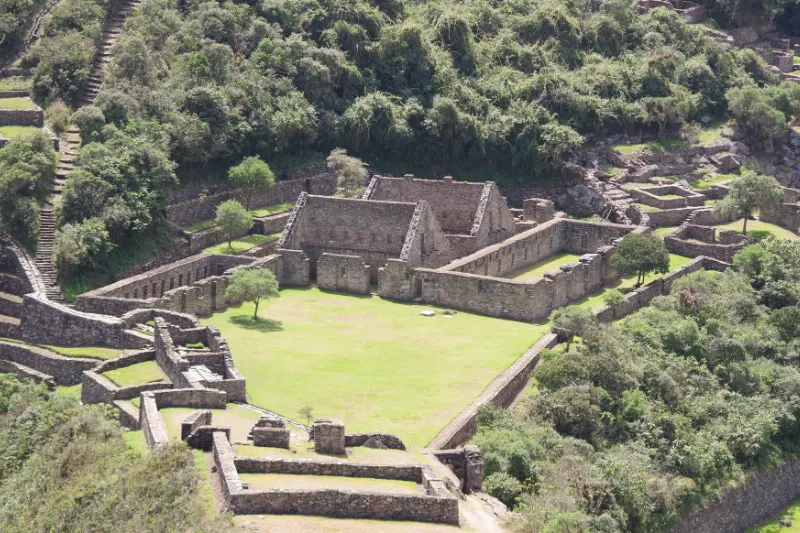
“Cradle of Gold” in Quechua. Late 1400s to early 1500s, Topa Inca Yupanqui behind the construction, son of the same Pachacuti who built Machu Picchu. Highlands connected to Amazon through this site, religious center, agricultural hub, administrative post, all layered on top of each other.
Spanish took Cusco in 1533. Manco Inca pulled the surviving Inca royalty into the Vilcabamba mountains and didn’t look back. Choquequirao became the holdout, invisible behind canyon walls and pure distance. Spanish searched, never found it. Inca traditions kept running there undisturbed for years after the conquest.
The myths and legends behind the Choquequirao run through Quechua communities around Cachora like background noise. Mountain spirits gathering at the ruins after dark. Gold buried under the central plaza as the Spanish closed in, location taken to the grave. Only 30 to 40 percent excavated so far, rest still under jungle. Those stories stop feeling like legend pretty quickly when that much of the site remains untouched.

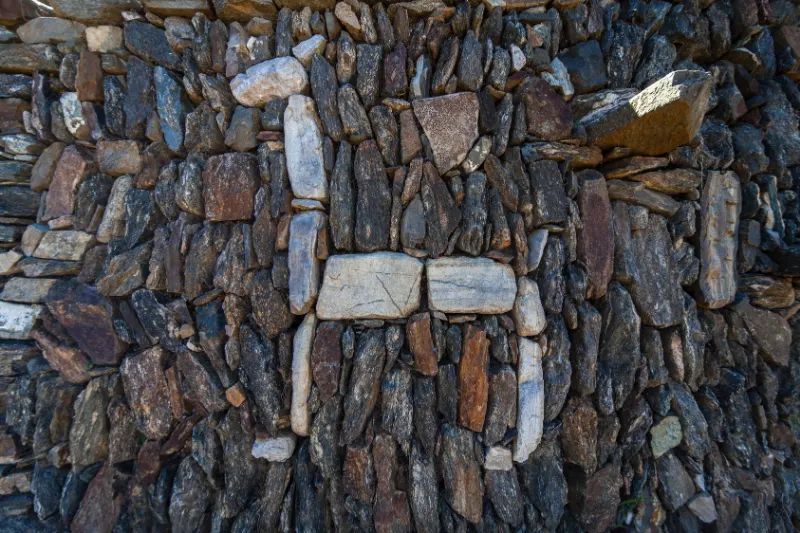
The choquequirao llamas sit in their own category. White quartz stones worked into large llama figures across steep western terraces, each one angled upward toward the ceremonial center. Near-vertical hillside. Standing there the first time, the math of building that on that slope just doesn’t add up, and yet there it is.
Canyon and cloud forest have their own surprises, a proper choquequirao wildlife tale for whoever slows down enough to notice. Spectacled bears higher up on the forested ridges. Cock-of-the-rock birds burning orange through the trees near the river. Condors working thermals over the passes without acknowledging the hikers below. Hummingbirds constantly below the treeline. Shows up without warning, disappears the same way.
Machu Picchu, four to five thousand people daily, strict one-way circuits, luxury train option available. The choquequirao trek on a busy day, maybe 50 people total. No circuit, no queue, no stranger in every single frame.
Total ground covered, Choquequirao probably wins. Less dug out, less restored, but bigger. Sectors spread apart, getting between them means actual walking, not a flat paved path. Changes the whole feel. Hard to explain until it’s happening.
Different trips, different travelers. Those wanting ease and famous views will find the top 5 Machu Picchu hiking tours worth a look as a separate experience. For solitude, effort, and something unpolished, Choquequirao every time:

Actually hard. Not the kind of hard that travel copy uses loosely. The choquequirao trek fools people because the ruins aren’t at punishing altitude. The canyon is the issue. Down 1,500 meters, cross the river, back up 1,500 meters, then turn around and do it again. Dry heat and sandflies running alongside the whole time.
Day one, rim to river, dusty switchbacks eating the knees from the first hour. Day two, cross, then straight back up the opposite wall. Days three and four, reverse it completely. Return leg hits just as hard as the approach, sometimes harder because the legs are already used up.
Canyon heat is the part nobody fully prepares for. Direct sun, minimal shade, dry air. Energy goes faster than expected, trail never flattens out long enough to recover properly.
General fitness is a starting point, not enough on its own. This trail punishes the descent as much as the climb, sometimes more. Eccentric quad strength, built through loaded downhill movement, is what separates people who walk out comfortably from people who limp the last few kilometers into Cachora:
Choquequirao altitude at the ruins, roughly 3,050 meters. Passes and trailhead between 3,000 and 3,300. Cusco itself at 3,399. Altitude starts mattering the moment the plane lands, not at the trailhead. Two to three days in Cusco or the Sacred Valley first makes a real difference, skipping that step is the most common and most avoidable mistake made on this trip:
No legal guide requirement on the peru choquequirao trek, unlike the Inca Trail. Options are real. Right choice depends on actual experience and gear, not what sounds manageable from a distance.
Tour choquequirao trek with an agency covers transport from Cusco, tents, food, bilingual guide who turns stone walls into actual stories. Standard four or five day packages between $400 and $700 USD per person. Luxury glamping well past $1,200. Porter wages and waste practices worth checking before committing to any company.
Right experience plus own gear makes independent hiking very doable, fraction of the guided cost. Campsites roughly 10 to 15 Soles per night, ruins entrance around 60 Soles. Arrieros in Cachora rent mules for 40 to 60 Soles per day per animal, back stays intact on the brutal sections, money lands directly with local families.

Four days out and back, standard choquequirao trek format. Five and eight-day versions exist, some connecting to Machu Picchu. Four days is the baseline most people plan from. Each day distinct, each one demanding in a different way.
Cusco to Cachora to Capuliyoc to Chiquisca or Playa Rosalina | ~18 km
Pre-dawn, four hours from Cusco to Cachora. Trail starts manageable, flat enough until Capuliyoc lookout drops the first real view of the canyon and ruins across the wall. After that, descent begins and just keeps going. Switchback after switchback, heat climbing as elevation drops, river campsites at the bottom.
Playa Rosalina to Santa Rosa to Marampata to Choquequirao Campsite | ~14 km
Sunrise start not suggested, required. Suspension bridge over the Apurimac, climb starts immediately on the other side and doesn’t ease up. Santa Rosa offers water and a short break. Long push to Marampata on the ridge, two more hours after that to the campsite just under the ruins.
Campsite to ruins and back toward Marampata or Santa Rosa | variable
Early into the park, mist on the plazas, almost nobody around yet. Ceremonial center, housing sectors, viewpoints fill the morning. Side hike to the western terraces for the choquequirao llamas is not optional, best stretch of the entire four days by most accounts.
Chiquisca to Capuliyoc to Cachora to Cusco | ~16 km
Mental day more than physical, though the body feels it too. Full climb back to Capuliyoc, long, exposed, headlamp start before dawn is the move. Pass behind you, trail levels out, Cachora comes into view. Transport back to Cusco. Hot meal. Done.
May through October, dry season, that’s the window for the choquequirao trek. Skies clear, trails stable, canyon heat manageable at least in the mornings. Nights cold regardless of month, warm layers not negotiable.
April and November shoulder months, greener, quieter, afternoon rain becomes a factor. December through March, rainy season, mudslides on steep sections, swollen river, rockfalls blocking the path, occasional full closures. Understanding the best season to visit Peru broadly helps here since the whole Andean region runs on the same cycle.
Dry season cuts out a whole layer of uncertainty. Stable ground underfoot, clear views from the passes, no reroutes forced by weather. On an already demanding route that matters considerably.

Freezing mornings and sweltering afternoons, same day, every day on the choquequirao trek. Everything carried moves up and down thousands of vertical meters. Wrong choices in packing show up fast on the trail. Sorting this out before the flight matters as much as the training.
Days of hard walking, then standing in those ruins. Mist on the plazas, choquequirao llamas cut into steep terraces, Vilcabamba stretching out with nobody else in sight. None of it easy. That’s the entire point and always has been.
Cable car talk keeps coming back around, isolation here might not last forever. Window is open now. Train early, plan properly, book the flights.
The peru choquequirao trek changes something permanently in most people who finish it. History earned on foot, extreme beauty, silence that’s genuinely rare. Cradle of gold, still there, still waiting.

Vilcabamba range, Cusco region, Peru, above the Apurimac canyon. No road. Only way in is on foot from Cachora.
Choquequirao altitude at the main ruins around 3,050 meters (10,010 feet). Trail drops much lower near the river first, climbing back up is where most of the difficulty lives.
Many choose the Choquequirao trek for solitude and something rawer. Physically harder than expected, crowd difference hits immediately.
Hard, genuinely. Repeated steep canyon descents and ascents in direct sun and dry heat. The peru choquequirao trek ranks among the harder multi-day routes in the Andes.
Independent hiking legal for experienced trekkers with proper gear. A guided Choquequirao tour simplifies everything considerably for first-time Andes visitors.
White quartz stone figures built into the western agricultural terraces. The Choquequirao llamas are among the most distinctive features in the entire Inca world.
May through October, stable trails and clear skies. Rainy season brings real hazards, best avoided.
Four days three nights covers the standard route. Five days for more time at the ruins or an easier daily pace.