+51 980 852 691 +51 930 842 108 [ES] info@andeantrekkingperu.com Calle Marques 231 Int. 115. CC Sotomayor.
Contact Us

Innovative Inca Farming Techniques and Practices

Picture this: you’re standing on a steep Andean slope. The air’s thin. The sun can feel hot, but the night might freeze your crops. The soil isn’t deep, and water doesn’t politely “stay put”—it rushes downhill like it’s late for something. So how did Inca farmers grow enough food to support big cities, road networks, and a whole empire?

Inca Agriculture and Farming

They didn’t “beat” the mountains. They worked with them. They shaped slopes into steps, guided water with gravity, and spread risk across many tiny climates—sometimes just a short walk apart. Honestly, that’s the part that still grabs people: the system feels both practical and a little magical, even though it’s mostly good observation plus a lot of patient labor.

A quick outline

  • Why it worked: microclimates, teamwork, and smart infrastructure
  • The big moves: terraces, canals, drainage, and storage
  • The daily grind: tools like the chakitaqlla (foot plow) and coordinated labor
  • The quiet superpowers: soil care, crop diversity, and preservation (hello, chuño)
  • So what? what modern growers and planners can borrow (carefully)

Alright—let me explain how the pieces fit together, because the “secret” isn’t one trick. It’s the way the tricks stack.

First, why Inca agriculture was such a flex

The Andes throw a lot at a farmer: steep terrain, sudden weather shifts, and huge changes in temperature over short distances. A field down in a valley might be warm and mild; a field higher up might be windy and cold. Instead of trying to make every place the same, Inca agriculture and farming leaned into that variety.

Think of it like running a diversified portfolio. If frost hits one zone, another might still do fine. If one stream runs low, a different watershed may carry you. It’s not “one perfect farm.” It’s many farms, connected.

The “vertical” strategy: farming up and down, not out and flat

Scholars often describe Andean farming as “vertical,” and it’s a useful word. The basic idea: communities aimed to access several ecological zones—highlands, mid-slopes, valleys—because each zone grows different things well.

High elevations were great for potatoes, quinoa, and grazing llamas and alpacas. Lower, warmer valleys supported maize and other heat-loving crops. So the Inca (and earlier Andean societies) treated altitude like a menu. You don’t put everything on one plate if you can help it, right?

And yes, there’s politics in here too. When the Inca state could coordinate production across regions, it could fill storehouses and provision travelers, workers, and armies. That coordination is a logistics story as much as an agriculture story.

Terraces: the mountain makeover that actually works

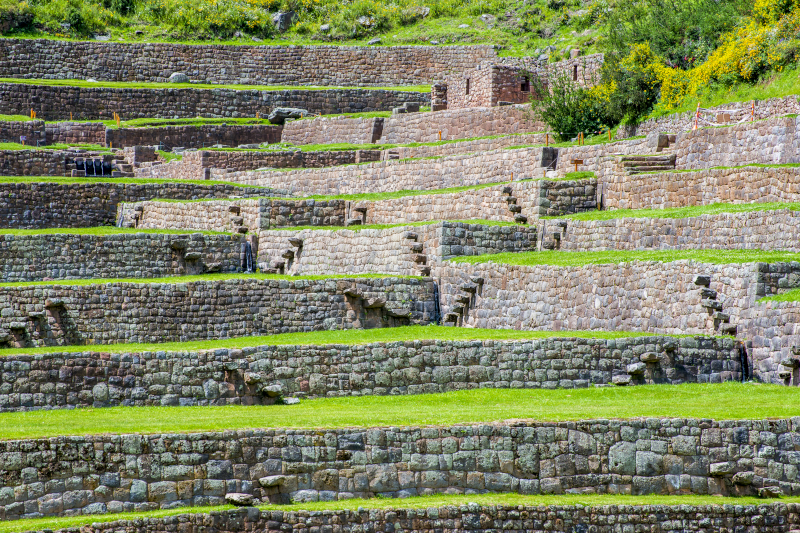
Let’s talk terraces—andenes—because they’re the headline act. Terracing turned steep slopes into steps with flatter planting areas. At first glance it looks like the point is “more land.” That’s true… but it’s also not the main point. The bigger win is control: control of soil, water, and temperature.

Inca Agriculture and Farming

If you’ve ever seen the terraces at Pisac in the Sacred Valley, you know what I mean. They cling to the mountainside in long, clean lines, like the slope is wearing a carefully fitted suit. And that’s not only for show—those steps helped make steep, fragile land farmable for the long haul.

Well-built terraces helped because they:

  • Slowed erosion by breaking up fast downhill runoff
  • Held soil behind stone retaining walls
  • Improved drainage so roots didn’t sit in soggy soil
  • Created microclimates (tiny climate zones) that farmers could use on purpose

And here’s the nerdy-but-important part: many terraces weren’t just dirt piled behind a wall. They were built in layers—stones, smaller rocks, sand, then topsoil—so water could move through without blowing the whole thing out. That’s basic civil engineering logic, done with local materials and a lot of experience.

Microclimates, aka “why one terrace can feel like a different town”

Terraces can warm and cool differently depending on their height, angle, and exposure. Stone walls soak up sun and release a bit of heat later. Some terraces are sheltered from wind; others get blasted. For crops that hate frost at the wrong moment, that difference matters.

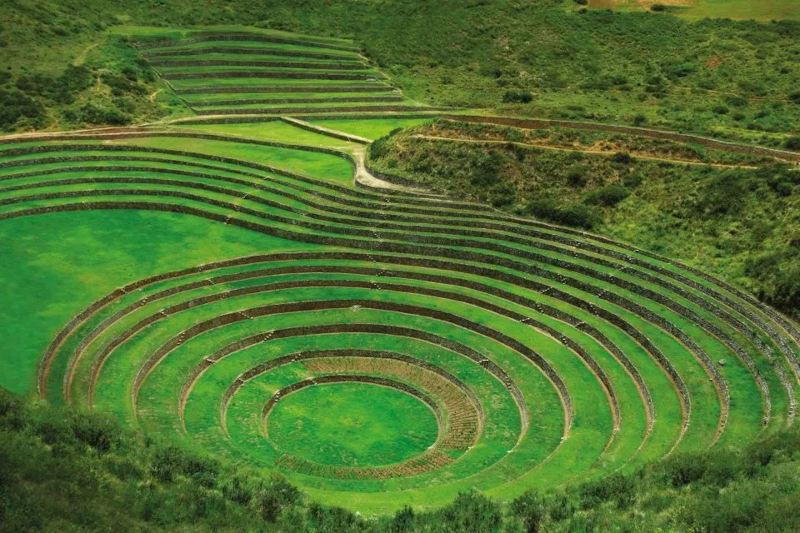
And if you want a site that makes the microclimate idea feel almost too obvious, there’s Moray. Those circular terraces look like an amphitheater, but the layout likely helped create different temperature and moisture conditions from top to bottom—almost like a living test kitchen for crops. (Not a lab coat situation; more like “let’s try maize down here and see what happens.”)

So farmers didn’t only ask, “Can we grow maize here?” They also asked, “Which terrace is warmest in the early season?” That kind of site-specific thinking is very modern, even if the tools weren’t.

Inca irrigation systems: water delivery, yes—water discipline, even more

When people hear “irrigation,” they picture adding water to dry land. In the Andes, the job was often two-sided: bring water when you need it, and get rid of it safely when you don’t. Too much water moving too fast can chew up soil and weaken terrace walls.

Inca irrigation systems used gravity-fed canals, channels, springs, and sometimes reservoirs to move water across rugged terrain. Sites like Tipón are often highlighted because the channels and water features show careful grading and clean distribution—like a well-run utility network, just made of stone and knowledge.

Then there’s Ollantaytambo, where the built environment and the water system are basically in conversation. You can see canals and engineered flows working alongside terraces and settlement areas—an everyday reminder that water management wasn’t an “extra.” It was part of the whole operating system.

The flow, in plain terms, looked like this:

  1. Capture water from springs, streams, runoff, or highland sources
  2. Carry it along contours at a steady, controlled slope
  3. Split it into smaller channels so one spot didn’t get blasted
  4. Deliver it to terraces and fields at the right pace
  5. Drain extra water away so soil stays in place and roots can breathe

You know what? Drainage doesn’t get enough credit. It’s the quiet work that keeps a system standing year after year.

Wiñay Wayna: terraces in the cloud forest, where rain plays rough

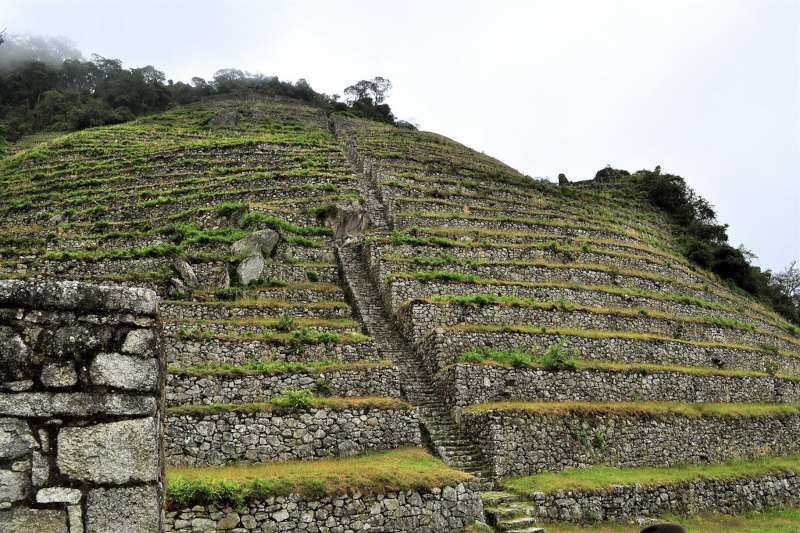
Wiñay Wayna (on the Inca Trail near Machu Picchu) is a great reminder that terraces weren’t only a high, dry-altitude thing. In the cloud forest zone, water is generous—sometimes too generous. Those dramatic terraces sit in a place where heavy rain, mist, and steep slopes could easily turn farming into a mudslide problem.

So the same terrace logic shows up again: stabilize the slope, manage runoff, protect soil, and keep water moving in the right direction. Different ecosystem, same physics. And honestly, that consistency is the point.

Raised fields: when the problem is “too wet,” not “too dry”

Terraces are famous, but raised fields matter too, especially in wetter or flood-prone areas like parts of the Lake Titicaca basin. Raised field farming creates elevated planting beds with canals beside them. The bed stays above saturated ground, and the canals help manage water levels.

Researchers such as Clark Erickson have described these fields as productive and sustainable, and they also make a good point: you don’t need a huge empire to build clever landscapes. Local communities can build and maintain systems like this through shared labor and know-how.

That’s an important nuance. People sometimes assume big ancient landscapes always mean top-down control. Sometimes it’s the opposite: lots of small groups doing steady work, season after season.

Inca farming tools: simple-looking gear, very specific jobs

Now for the toolkit. Inca farmers didn’t have horses and oxen to pull heavy plows, and steep terraces aren’t friendly to big animals anyway. So the tools had to match the terrain.

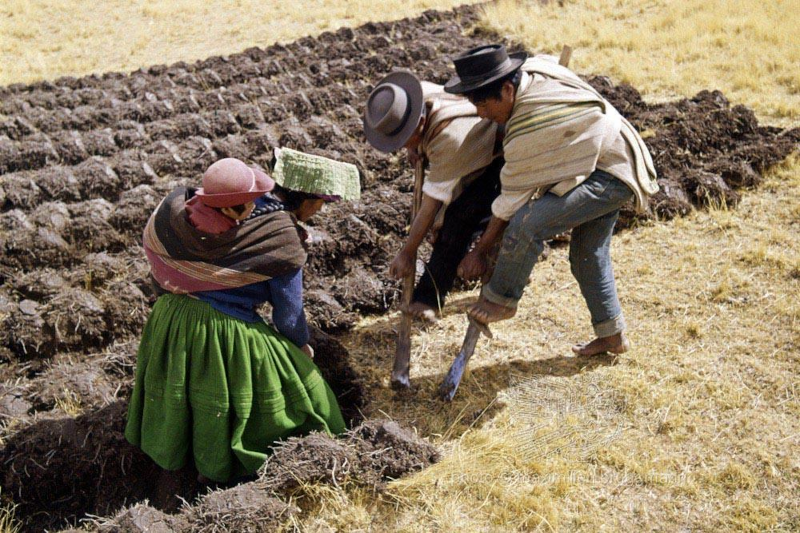
The star is the chakitaqlla (often spelled chaquitaclla), the Andean foot plow. It’s basically a long digging tool with a footrest so you can drive the point into the soil using your weight. It sounds basic—until you try farming rocky, high-altitude ground. Then it starts to look like a smart, purpose-built design.

Inca Agriculture and Farming

Other inca farming tools included hoes, digging sticks, picks, shovels, and clod breakers. None of this is flashy. But it’s effective. And it pairs well with team labor: one person loosens soil, another breaks clods, another places seed or tuber. The workflow is tight and human-scaled.

Labor and organization: the real “machine” behind the machine

Agriculture at this scale needs coordination. In many Andean contexts, households were part of kin-based communities (often described with the term ayllu). Land and labor were managed through reciprocal obligations—basically, structured helping-each-other.

At the state level, labor obligations could also be directed toward big projects: terraces, canals, roads, storehouses. It can sound harsh on paper, and sometimes it was. But it also explains how massive infrastructure stayed maintained. Terraces aren’t a “build once and forget” situation. They’re more like a trail system: if you stop maintaining it, nature reclaims it fast.

And here’s a small contradiction that’s worth holding: this system was highly organized, yet it relied on local judgment. Central planners could mobilize work crews, sure. But local farmers knew which terrace drains fast, which one frosts first, and when the water should be diverted. Both levels mattered.

Soil care: feeding the ground without a bag of synthetic fertilizer

Terraces reduce erosion, but soil still gets tired if you keep taking and never giving back. Andean farmers used organic amendments where available—camelid manure, guano in some regions, and other local inputs. Crop rotation also helped keep fields productive and reduced pest pressure.

If you’ve ever gardened, you know the feeling: you can’t brute-force soil forever. You build it. You protect it. You keep it covered when you can. The Inca didn’t use modern soil science language, but the habits line up with what soil folks talk about now—structure, fertility, and water-holding capacity.

Crop diversity: not just variety for variety’s sake

When people picture Inca food, they often think “potatoes.” Fair! Potatoes were huge in the                                                     highlands. But the wider Andean crop list is long: quinoa, maize, beans, squash, peppers, sweet potatoes, peanuts, and a range of tubers like oca, ulluco, and mashwa, depending on region and altitude.

Diversity wasn’t a culinary hobby. It was risk management. A single crop system is efficient until it isn’t—until a pest shows up, or the rains shift, or frost hits at the wrong week. A mixed system absorbs shocks better. It’s not perfect, but it’s sturdy.

Preservation: turning harvest time into peace of mind

Growing food is one challenge. Keeping it edible for months is another. The Inca made preservation a core part of the system, not a side chore.

Chuño—freeze-dried potatoes—might be the most famous example. It uses the high Andes like a natural “processing plant”: freezing nights, sunny days, and human effort to press out water and dry the tubers. It’s clever because it’s low-tech in materials, but high-skill in timing and handling.

And once you have preserved food, you can do something powerful: you can move it, store it, and use it when weather turns against you. That’s food security in a very real sense.

Qollqas (storehouses): agriculture meets supply chain

The Inca built storehouses—often called colcas or qollqas—across the empire. Their placement and design helped keep goods cool and dry, and they held staples like maize, quinoa, potatoes (often preserved), plus tools and textiles.

If you work in operations, this is the moment where it clicks: production is only half the story. Storage and distribution are the other half. The Inca road system and storehouse network helped move supplies to where they were needed—whether that was supporting travelers at way stations or getting communities through a lean season.

Seasonality and ritual: the calendar had meaning

Farming is seasonal everywhere, but in the Andes, that seasonality carried cultural weight. Rituals, offerings, and ceremonies were tied to planting and harvest. It’s easy for modern readers to separate “practical farming” from “spiritual life,” but for many farming societies, those are woven together.

A shared ritual calendar can also work like a coordination tool. It tells people when to show up, when to plant, when to harvest, when to repair canals. It’s social glue, not only belief.

Inca Agriculture and Farming

Want to see the techniques up close?

If you’re the kind of person who learns with your eyes (same), these places make the concepts feel real:

  • Pisac: sweeping agricultural terraces and slope management in the Sacred Valley
  • Ollantaytambo: terraces paired with visible water engineering and urban planning
  • Moray: concentric terraces that showcase microclimate differences
  • Wiñay Wayna: cloud-forest terraces where drainage and stability are everything

What’s worth borrowing today

Modern farms use tractors, synthetic inputs, satellites, spreadsheets—the whole stack. So no, we can’t simply recreate Inca agriculture and farming in the United States and call it a day. But the underlying principles still have bite:

  • Design for water’s real behavior. Slow it, spread it, guide it, and give it safe exits.
  • Use diversity as insurance. Crops, planting dates, and micro-sites can reduce risk.
  • Value maintenance. Infrastructure isn’t “done” when it’s built.
  • Plan for after harvest. Storage, processing, and distribution shape resilience.

Also, a small trend note: with more growers talking about regenerative agriculture, contouring, and water retention landscapes, terraces and canal logic keep showing up in new clothes. Different context, similar physics.

Common misconceptions (let’s clear a few up)

“The Inca invented everything”

They built on older Andean knowledge and then refined and coordinated it across a huge area. Their genius often looks like good systems thinking: improve what works, standardize where helpful, and connect it all.

“Terraces are basically flat fields”

They’re engineered structures—walls, fill layers, drainage, and microclimate effects—working together. The visible step is only the surface story.

“Irrigation means adding water”

It also means controlling water, including removing it at the right time. Delivery and drainage are a pair.

“Simple tools mean simple farming”

Tools like the chakitaqlla are simple in parts, not in purpose. They fit steep terrain and human teamwork in a way heavy equipment often can’t.

So, why does it still matter?

The lasting legacy of Inca farming techniques isn’t one monument or one clever canal. It’s the mindset: observe closely, build with the landscape, spread risk, and store what you can. That’s how a demanding environment became a working food system.

If you’re studying ancient engineering, climate adaptation, or sustainable agriculture, the Inca example is a reminder that “advanced” doesn’t always mean high-tech. Sometimes it means well-chosen tradeoffs—made consistently, and maintained with care.